For two or three years now I have been asking myself, ” How is this possible?” The conversation centres around ” Dust free environment “. What is that exactly? I spend two or three hours in my workshop almost every day, and I would speculate that the question previously posed would seem to be a virtual impossibility. That is my opinion!
A hobbyist in the workshop at the weekend may be forgiven in assuming he or she has a dust free environment, however that premise is, in my opinion, somewhat unlikely.
In my workshop I have a direct suction to the planer, jointer, bandsaw, drum sander, and two to the table saw, one being an uppermost suction shroud over the blade. This is all well and good, but what about drilling, hand sanding, planing, turning etc etc.
I bought a lower priced dust collection system several years ago. It incorporated the cloth type filter. At the outset it appeared to function well, however it was an incredibly bad design and changing the collection bag was a nightmare.
Approximately a year ago I decided to upgrade the entire system to one of the most prominent on the market. The one I purchased was around $2500.00, however the one I received was a more advanced and much larger model, valued around $5000.00. I notified the supplier of the error who said I could retain it if I chose to. By that time, all 13 boxes had been opened, and assembly had begun. The unit was too large for my workshop, but returning it would have been a nightmare, so I assembled it in my workshop.
A few days after activation I again noted that now familiar layer of dust over all workshop surfaces. I checked all the connections, both on the pressure and suction sides and all appeared ok. I contacted the manufacturer’s service rep. That episode turned out to be lengthy, exasperating, and an exercise in futility.
I purchased the dust collection system for two reasons, (1) to collect wood chip particles. (2) For health reasons, and to eliminate most dust particles from the workshop.
Item (1) is important, and the system appears to function normally in the case of a semi closed system.
Item (2) Is very important, but the results appear questionable.
Comments on my system:
Table saw. The lower suction appears to function very well, however the hood or shroud positioned above the blade can only capture the lower velocity dust particles,which at an estimate would approximate 25% of that particular discharge. The angle of discharge also seems to be a factor in the problem. The higher velocity dust and chip particles are propelled at lower angles relative to the cast iron bed of the table saw, in a direction towards the operator. Again, these are unlikely to be drawn into the suction section of the hood or shroud. This machine appeared to be the biggest culprit regarding chip and dust collection.
Jointer. Appears to function well.
Bandsaw. Appears to capture about 90%
Planer. Functions well. (partially closed system)
Drum ander. Functions very well. (partially closed system)
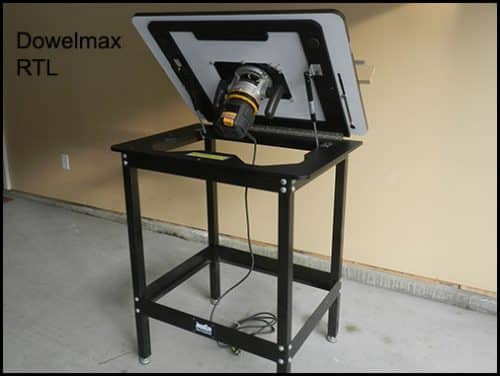
Router. Initially, the dust and chip collection was very poor. I redesigned and sealed the cabinet. Note: An opening of sufficient area had to be incorporated in the new design to allow proper air flow. It was very successful except that with some cuts, chips and dust remnants were evident around the table top.
Hand sanding, drilling, planing. All create dust.
Could I have missed something in my extractor assembly? I have checked several times and nothing untoward was noted. Specifications refer to the cartridge mesh design as being within 0.3 microns. To provide some perspective of this microscopic field, 70 microns equals the diameter of the average human hair. 50 microns, approximates the size an object can be detected by the human eye. As you can see 0.3 microns is an incredibly minute aperture. Notwithstanding air flow calculations, there would seem little advantage in restricting the filter mesh to .3 microns, when dust is being discharged at the cutter or blade openings.
This is not a condemnation of all dust collection systems. They are useful, particularly with respect to chip collection. However, expectations have to be measured and realistic. Do the required research. Most small workshops will usually involve activation of one machine at any given time, in other words dust extraction can be concentrated solely on that machine, with the other units blanked off. Try not to overextend, and purchase something beyond that which you require!
My conclusion is: In consideration of all the foregoing factors a dust free workshop environment is probably a misnomer, and in all probability, an impossibility. My experience indicates that to attain this, the design would have to include closed systems, with inclusions to allow for the required air flow. That would be difficult, if not impossible to attain. The drum sander is however an excellent example of a partially closed system with a high level of containment.
The manufacturers do not claim to provide a dust free environment, just a “cleaner” one. My recommendation: Even with a dust collection system installed, wear a suitable mask at all times in the workshop.
James of “Stumpy nubs” fame is very knowledgeable and recommends a particular brand in one of his videos. “This is a myth”. Check that out.
The views expressed are my own, and based on my own experience. The intention is to enlighten prospective purchasers, and to add guidance with respect to expectations.
Jim Lindsay Ch. Eng. M.I. Mar. E. Dowelmax.